 Skip to content




Description
Pied Indian Ringneck
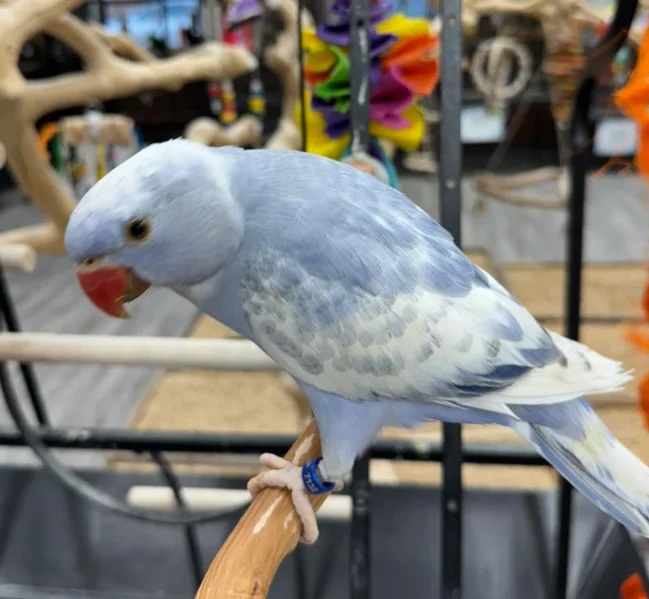
Among the many color varieties available in Indian Ringneck breeding, the Pied Indian Ringneck stands out because no two birds necessarily display exactly the same feather arrangement. Its beauty comes from the mixture of differently colored patches across its body, making it especially appealing to enthusiasts who appreciate unusual plumage patterns.
The Pied Indian Ringneck belongs to the rose-ringed parakeet species, which has its natural origins across parts of Africa and Asia. The Indian subspecies is particularly associated with southern India and Sri Lanka. The pied appearance is a captive-bred color mutation rather than a separate wild species. Through selective breeding, aviculturists have developed birds displaying different combinations of green, yellow, blue and other colors.
One of the most interesting features of this variety is its irregular feather distribution. Some pied birds have large yellow areas over their wings and chest, while others display scattered patches across an otherwise green or blue body. The exact appearance depends on the bird’s genetic background.
In terms of physical structure, Pied Indian Ringnecks retain the familiar long tail, narrow body, strong curved beak and agile feet of their species. Their average adult size is similar to that of other Indian Ringneck varieties.
Their behavior is equally interesting. These birds are energetic, observant and intelligent. They enjoy chewing, climbing and playing with enrichment toys. They can also become excellent mimics when given regular opportunities to hear and practise sounds. Early socialisation is valuable because individual birds may differ in confidence and willingness to interact.


Reviews
There are no reviews yet.